Ruy Perez de Viedma
Don QuixoteRuy Perez de Viedma is a Spanish infantry captain whose military ambition carries him from a family decision about inheritance into the battle of Lepanto and years of captivity. His first-person account turns that reversal into an extended story of endurance and escape: captured after risking himself in battle, he keeps seeking liberty and eventually leaves Algiers with Zoraida. The narrative’s final emphasis is not on a secure homecoming, but on their companionship and his unanswered questions about the family he hopes to find.
Family and Choice of a Profession
Ruy comes from a family in the Mountains of León. His father, a former soldier whose generosity had made it difficult to preserve the family’s means, resolves to divide his property among his three sons while retaining a share for himself. He summons them to discuss their futures, presenting a profession as a choice that should bring both honor and profit. Ruy’s later story recalls this family decision as the beginning of a life shaped by a calling beyond inheritance.
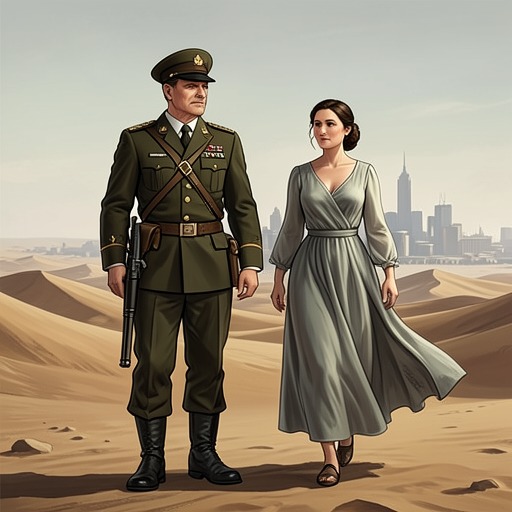
He chooses military service. According to the account later related by the curate, he rises through his own conduct and courage to become an infantry captain, with the prospect of further command. His advancement makes his subsequent loss of freedom particularly stark: he enters the battle of Lepanto with a promising career, but leaves it a captive.
Lepanto and Captivity
During the battle, Ruy’s company is aboard the galley of John Andrea when El Uchali attacks a Maltese galley. Ruy leaps onto the enemy vessel to assist it, but that galley sheers away before his men can follow. Isolated among the opposing crew, he is captured and taken away wounded. While many Christian rowers regain their freedom in the battle’s aftermath, Ruy is among those carried into captivity.
He is transported to Constantinople, where his capture of the standard of the Order of Malta is treated as proof of his bravery. He later passes into the possession of Hassan Aga, a Venetian renegade who becomes ruler of Algiers, and is taken there. The transfer brings him nearer to Spain but does not make escape easy: he had already tried repeatedly to find a chance to escape in Constantinople, without success, and resolves to continue seeking one in Algiers.
In Algiers, Ruy is confined in a bano, a prison holding Christian captives belonging to the ruler, private owners, or the municipality. Because he is recognized as a captain and considered eligible for ransom, he is kept among captives marked for redemption; the chain he wears signals that status as much as it serves to restrain him. Even so, the possibility of ransom does not spare him hardship. He and the other captives sometimes lack sufficient food and clothing, and he is distressed by the cruelty inflicted on Christians around him.
Zoraida and the Escape from Algiers
A route out of captivity opens through a message from Zoraida, the daughter of Hadji Morato. In the letter, she explains that a Christian enslaved in her household taught her Christian prayers and told her about the Virgin Mary. She says she wants to reach Christian lands, offers to bring money, and proposes marriage if Ruy wishes it. Her message also makes clear the danger: if her father learns of her plan, he may punish her severely. The escape therefore depends not only on Ruy’s hope of freedom but on secrecy, trust, and coordination across the boundaries separating captives and their captors.
On the appointed Friday, the renegade and the Christian captives assemble near a vessel anchored after nightfall. Some of the men gathered there expect to win their liberty by force and do not know the renegade’s plan. Ruy and his companions first secure the vessel, binding its Moorish rowers under guard; then they go to Hadji Morato’s garden. Zoraida is waiting at a window. Once she recognizes that the approaching party are Christians, she comes out to join them, and the group makes its escape.
Aftermath and an Uncertain Homecoming
After reaching Velez, the group remains there for six days. The renegade leaves for Granada to return to the Church through the Spanish Inquisition, and the other freed captives depart by different routes. Ruy and Zoraida are left with only the money given to her by a Frenchman; he uses some of it to buy her a mount. For the time being, he accompanies her as her guardian and squire, not as her husband.
They set out to learn whether Ruy’s father is still alive and whether either of his brothers has fared better than he has. He regards Zoraida’s patience through poverty and her eagerness to become a Christian with admiration, and describes their companionship as a source of happiness. Yet their freedom has not resolved the material uncertainties of exile: he does not know whether his own country can shelter her, or whether time and death have changed his family’s circumstances beyond recognition.
The Story’s Frame and Significance
Ruy’s account reaches the reader as a story told within the larger inn narrative. Later, the curate recounts the captain’s adventures to the Judge, identifying Ruy by name and recalling his origins in the Mountains of León, his rise in the infantry, and his capture at Lepanto. The Judge listens closely as the curate relates the adventure with Zoraida. This retelling gives Ruy’s private history a second life as evidence of a shared past, while keeping the account anchored in what its speakers can establish.
Ruy’s trajectory repeatedly sets military achievement against vulnerability. The act that confirms his courage in battle also separates him from his men and costs him his liberty; his rank makes him a candidate for ransom but does not shield him from prison hardship. His escape, in turn, is not a solitary triumph: it depends on Zoraida’s initiative, the renegade’s assistance, and the captives’ cooperation. The ending preserves that mixture of hope and incompletion. Ruy has escaped Algiers and found a companion, but the family home toward which they travel remains unknown.